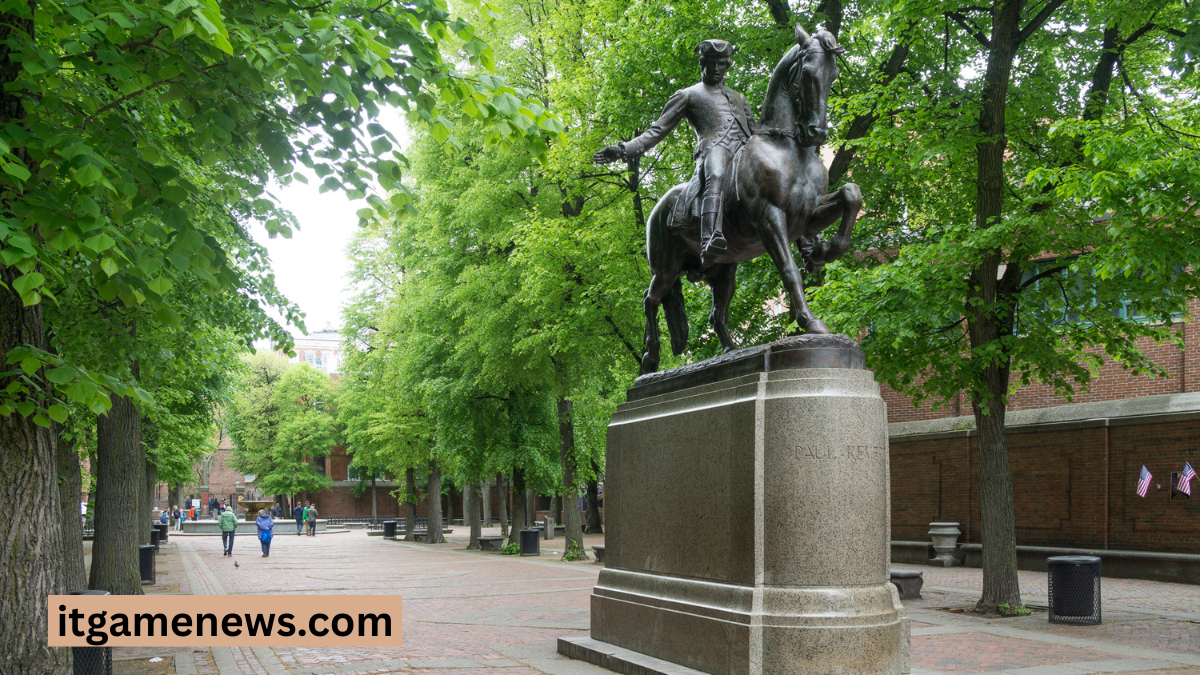
The Paul Revere Statue Boston is one of the most recognizable and historically significant monuments in the United States. Located in the heart of Boston’s North End, it attracts thousands of visitors every year who come to explore the city’s deep Revolutionary War heritage. The statue stands as a tribute to the legendary patriot Paul Revere, whose midnight ride became a defining moment in American history. Today, the monument is not only a historical marker but also a cultural symbol of freedom and resistance.
The statue is officially dedicated to Paul Revere Statue, honoring the man who played a key role in warning colonial militias of approaching British forces. Its placement along the famous Freedom Trail makes it a must-visit stop for tourists exploring historic Boston. Surrounded by cobblestone streets and centuries-old architecture, the statue blends seamlessly into the city’s rich historical landscape.
For visitors and history enthusiasts, the monument serves as both an educational landmark and a visual storytelling piece. It connects modern-day Boston with its revolutionary past, making it one of the most photographed and admired statues in the city.
Historical Background of Paul Revere and the Statue
The inspiration behind the Paul Revere Statue Boston comes from the life of Paul Revere, a renowned silversmith, patriot, and messenger during the American Revolution. He is best known for his midnight ride in April 1775, when he warned colonial militia about British troop movements. This act of bravery became a symbol of American independence and resistance against British rule.
The statue was created to commemorate Revere’s lasting legacy and his contribution to American history. Boston, being a central hub of revolutionary activity, chose to honor him with a permanent monument that would preserve his story for future generations. The idea of the statue emerged in the 19th century, during a period when America was actively celebrating its founding heroes.
The dedication of the statue marked an important cultural moment for Boston. It reflected the city’s desire to preserve its revolutionary identity while educating the public about the sacrifices made for independence. Today, the statue continues to serve as a reminder of courage, urgency, and patriotism that defined the early days of the United States.
Design, Artist, and Artistic Features
The Paul Revere Statue Boston is widely admired for its artistic excellence and historical accuracy. The sculpture depicts Paul Revere riding a horse, symbolizing his famous midnight journey. Every detail, from his determined posture to the movement of the horse, is designed to evoke urgency and action.
The statue was crafted with great attention to realism and symbolism. The sculptor carefully studied historical references to ensure that Revere’s appearance and clothing were consistent with the 18th-century colonial era. The horse is shown in motion, reinforcing the idea of a critical mission in progress.
Beyond its realism, the statue also carries symbolic meaning. It represents communication, bravery, and the power of individual action in shaping history. The dynamic pose makes it stand out among other static monuments, giving it a sense of life and movement. This artistic approach helps visitors emotionally connect with the historical narrative behind the sculpture.
Location and Importance in Boston’s North End
The Paul Revere Statue Boston is located in the historic North End, one of the oldest neighborhoods in Boston. This area is known for its narrow streets, colonial-era architecture, and deep connection to American history. The statue’s placement is highly strategic, as it sits near several other key landmarks on the Freedom Trail.
Visitors can easily access the statue by walking through Boston’s historic district, making it a convenient stop for tourists exploring the city on foot. The surrounding environment enhances the experience, as cobblestone paths and historic buildings create an authentic colonial atmosphere.
The location also plays a symbolic role. By placing the statue in the North End, Boston ensures that Paul Revere’s legacy remains physically connected to the city he once lived and worked in. It allows visitors to experience history in the same streets where it once unfolded.
Symbolism and Cultural Significance
The Paul Revere Statue Boston is more than just a monument; it is a powerful symbol of American independence and resilience. Paul Revere himself represents courage, urgency, and the importance of communication during times of crisis. His midnight ride has become a legendary story taught in American history classrooms.
The statue’s design, featuring Revere on horseback, symbolizes movement and action. It reflects the urgency of his mission and the critical role he played in warning colonial forces. This imagery has become an enduring representation of patriotism and civic duty.
Culturally, the statue serves as a reminder of Boston’s role in shaping the United States. It is often featured in educational tours, documentaries, and travel photography. For both locals and tourists, it represents a connection to the nation’s founding values of freedom and independence.
Visitor Experience and Travel Tips
Visiting the Paul Revere Statue Boston offers a unique historical experience. The site is open to the public year-round and is free to access, making it an easy addition to any Boston itinerary. Many visitors include it as part of the Freedom Trail walking tour, which highlights important Revolutionary War landmarks.
The best time to visit is during the early morning or late afternoon when lighting conditions are ideal for photography and the area is less crowded. Spring and fall seasons are especially popular due to comfortable weather and scenic surroundings.
Visitors are encouraged to take their time exploring the statue and reading nearby historical markers. Guided tours are also available for those who want a deeper understanding of Paul Revere’s life and the significance of the monument.
Nearby Attractions and Things to Explore
One of the advantages of visiting the Paul Revere Statue Boston is its proximity to several other historic attractions. Just a short walk away is the famous Paul Revere’s House, where the patriot once lived. This adds a personal dimension to the statue experience.
Other nearby landmarks include Old North Church, which played a key role in Revere’s midnight ride, and various stops along the Freedom Trail. The North End is also known for its vibrant food scene, offering visitors a chance to enjoy authentic Italian cuisine after their historical tour.
This combination of history and culture makes the area one of the most rewarding parts of Boston to explore.
Conclusion
The Paul Revere Statue Boston remains one of the most important historical monuments in the United States. It honors the legacy of Paul Revere and serves as a powerful reminder of the courage and determination that shaped American independence. Its location, artistic design, and cultural significance make it a must-visit landmark for anyone exploring Boston.
Whether you are a history enthusiast, a tourist, or a student, the statue offers a meaningful connection to the past. It continues to inspire visitors with its story of bravery and its lasting impact on American identity.
